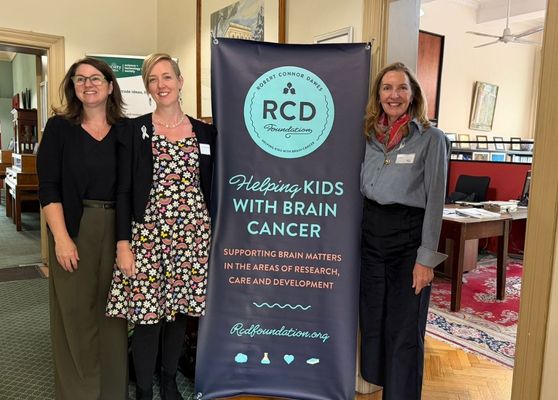

During Go Grey in May, the Robert Connor Dawes Foundation was proud to support the launch of an Australian-first report, Mapping the Journey of Australian Paediatric Low-Grade Glioma (pLGG) Patients.
Led by Honours researchers from Monash University and launched by Michelle Ananda-Rajah in partnership with Ipsen, the report captures something long overlooked—the full journey families face, from diagnosis through to recovery and beyond.
Survival is Only Part of the Story
Paediatric low-grade glioma (pLGG) is the most common childhood brain tumour. While survival rates are high, this report highlights a critical truth: survival is only one part of a much longer and more complex journey.
For many families, the road to diagnosis is far from straightforward. Symptoms such as headaches, fatigue and vomiting are often mistaken for common illnesses, leading to delays and uncertainty.
Once diagnosed, treatment can extend over months or even years. Some children undergo chemotherapy for up to two years, followed by ongoing scans, therapies and specialist care long after treatment ends.
Life Beyond Treatment
What happens after treatment is where many of the ongoing challenges begin.
Children may experience long-term effects including fatigue, learning difficulties, physical impairments and social challenges. Returning to school, rebuilding confidence and regaining independence can take time—and support.
Every child’s experience is different, but one thing is consistent: recovery is not a single milestone. It is an ongoing process.
The Power of Lived Experience
At the heart of this report are the voices of families.
Insights drawn from interviews with parents, children and clinicians across Australia have been brought together into a practical Patient Journey Map—helping families better understand what to expect at each stage.
The research also highlights the critical role of parental advocacy, and the importance of equipping families with the information and support they need to navigate complex care systems.
A special thank you to RCD Legacy Ambassador Sarah from Hugh’s Quest, who contributed to the report and shared her family’s experience at the launch. Stories like Sarah’s are essential in shaping more compassionate and connected care.
Why This Matters
This report is more than research—it is a roadmap for change.
It identifies clear opportunities to improve outcomes for children and families, including:
- Faster and more accurate diagnosis
- Better coordination across healthcare services
- Stronger long-term support beyond treatment
It also reinforces the importance of continued investment in research and awareness—something that sits at the heart of Go Grey in May.
Looking Ahead
There is reason for hope. Advances in targeted therapies are opening up new treatment options, helping to improve outcomes while reducing long-term impact.
But there is still more to be done.
By listening to families and understanding their experiences, we can help shape a future where children not only survive brain cancer—but live well beyond it.