
From 10–15 April, we celebrate World Music Therapy Week 2026 — an opportunity to connect with music therapy and the real moments of change it creates every day.
This year’s theme, Connect with music therapy, highlights the powerful role music can play in supporting people through some of life’s most challenging moments.
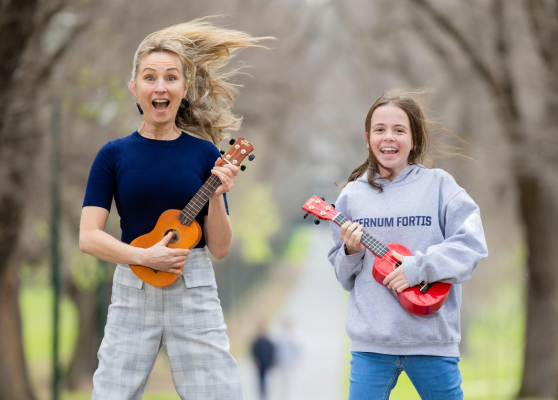
RCD Foundation ambassador Lisa McCune and past music therapy recipient Georgia Maguire.
What is music therapy?
Music therapy is a research-based practice and profession in which music is used to actively support people as they strive to improve their health, functioning and wellbeing
Through structured, goal-directed interventions, music therapy can support:
- Communication
- Movement and coordination
- Cognitive function
- Emotional wellbeing
Music therapy is both clinical and deeply human — supporting functional outcomes while creating meaningful moments of connection.
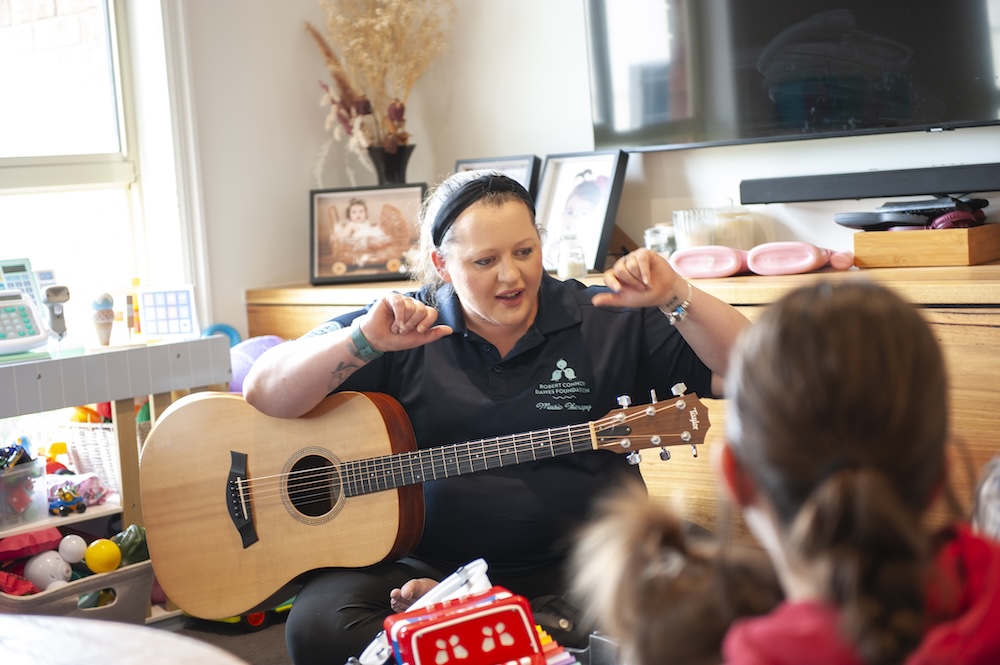
RCD Foundation music therapist, Megan Cotter with an RCD Music Matters grant recipient.
RCD Foundation Music Matters Grants
At RCD Foundation, music therapy plays an important role in how we support children and young people with brain cancer.
Through our Music Therapy Program, we fund:
- In-home music therapy sessions for children aged 0–25
- Music therapy resource grants to ensure access to equipment and support
This allows families to access therapy in a familiar, safe environment, helping young people express themselves, regulate emotions and stay connected to who they are throughout treatment.
For children facing brain cancer, music therapy can:
- Provide a sense of control during uncertain times
- Support emotional expression when words are hard to find
- Create moments of joy, connection and normality
It’s a form of care that extends beyond treatment — supporting the whole person.


